Guides
What to buy, what it should cost, and how to get more out of the body you already own. Every number here comes from optics, a named rule of thumb, or the same catalogue the finder ranks — so you can click through and check it.
Before you buy
Work out which camera the pictures you want actually need, then what it should cost.
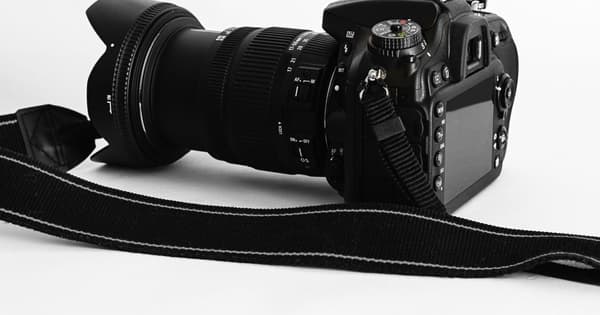
How to choose a camera: the five questions that actually decide itWhat you photograph, how far you carry it, what you print and what glass you already own. Five answers that cut 61 cameras down to about three.
Do you need a camera, or is your phone already enough?Your phone is genuinely better at most everyday pictures. Here are the four situations where physics still wins, and what to buy if none of them apply.
Sensor size explained: what it changes, and what it does notThe real dimensions, the crop factor applied honestly to field of view, depth of field and light, and when a smaller sensor is the better buy.
How much to spend on a camera: what the money actually buysWhat each price band adds, why the body is the half that depreciates and the glass is the half that does not, and the real cost of a working system.
Lenses before bodies: the advice everyone gives, argued properlyWhat a lens changes that a body cannot, what a body changes that a lens cannot, and the one situation where buying the camera first is the right call.
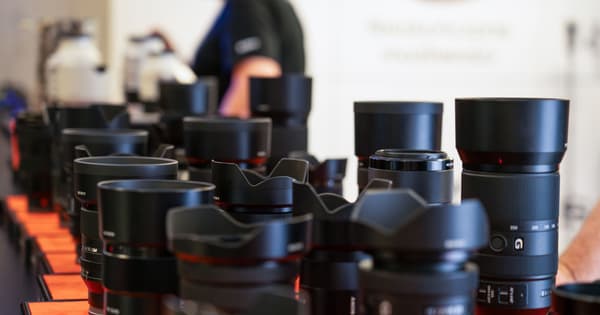
Understanding lens specs: how to read a lens nameFocal length, maximum aperture, the second f-number, stabilisation, close focus and equivalence: what a lens name tells you before you open a review.
Autofocus and burst: the specs that catch a moving subjectSubject detection, buffer depth, rolling shutter and viewfinder blackout: which autofocus and burst numbers decide the shot, and who actually needs them.
Once it is yours
Exposure, focus, framing, and the care that keeps a kit working away from home.
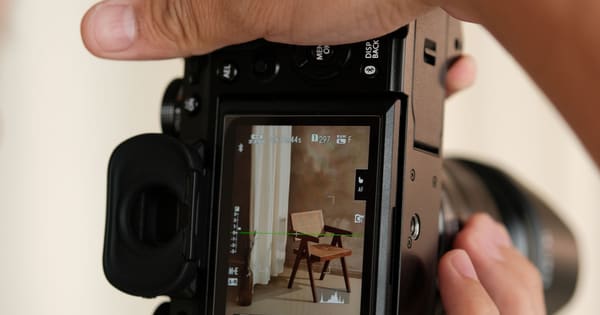
Your first three lenses, in the order that gets you shootingThe kit zoom is better than its reputation. A fast prime is the cheapest big upgrade. The third lens comes from your own focal-length figures.
Exposure basics: aperture, shutter speed and ISO as three tradesWhat aperture, shutter speed and ISO each trade away, what a stop is, when manual helps, and starting settings for sun, street, sport and stars.
Focal length and framing: where you stand decides the pictureWide, standard and telephoto change perspective and background, not just how close you get. Compression, portraits, and an exercise that proves it.
Camera care and travel: keeping the kit working, and getting it thereLens and sensor cleaning, where to stop before you damage something, condensation, what weather sealing does not promise, and what to pack.